
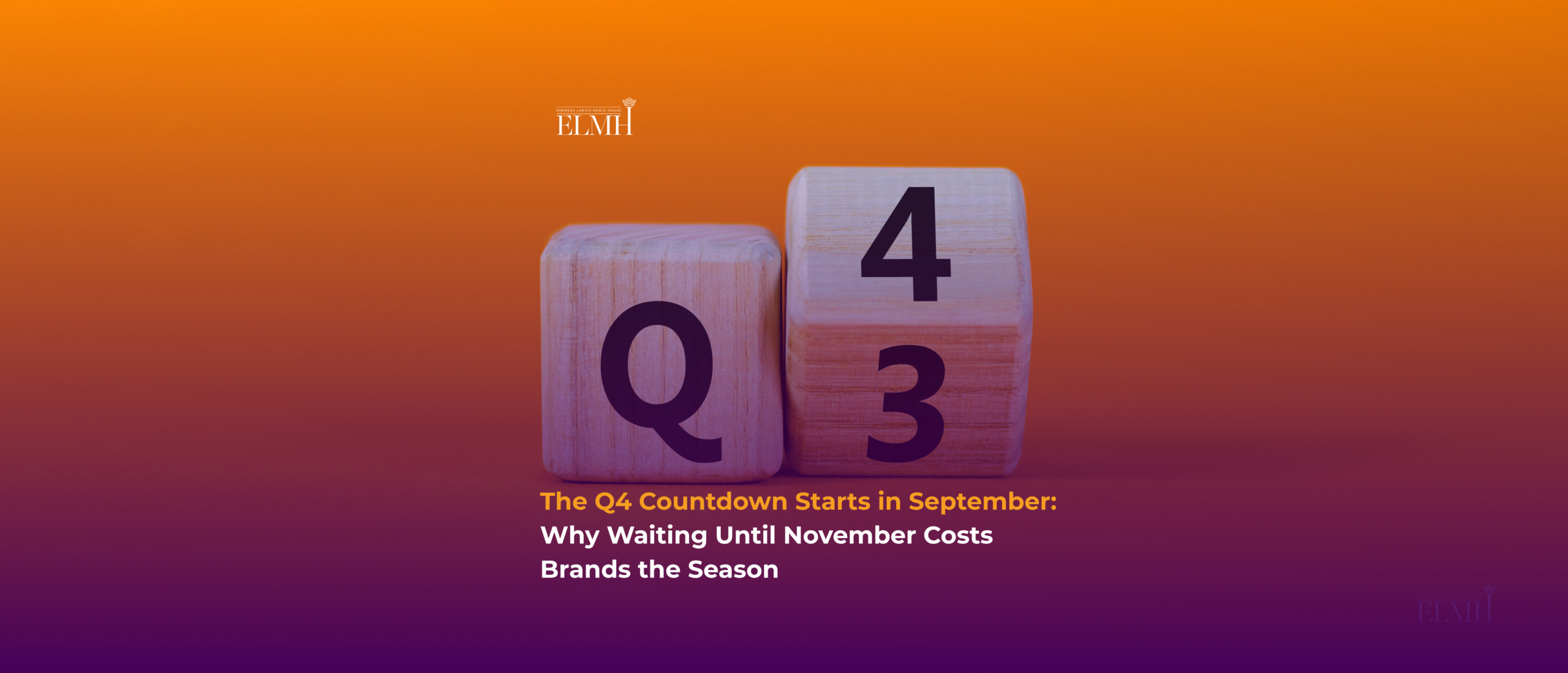
The Core Insight: Brands that begin Q4 marketing planning in September, rather than waiting for November’s holiday urgency, get four to six weeks to test creative and messaging before ad costs climb as much as 34% into Black Friday–Cyber Monday, turning Q4 into planned acceleration instead of a reactive scramble.
By the time most brands begin talking about Q4, the season is already half decided. The instinct is to wait until the calendar says November — post-Halloween, when holiday urgency finally starts to feel real — before touching budgets, briefs, or creative. That instinct is understandable. It is also, for purpose-driven brands with limited runway, precisely backwards.
The stakes have only gotten larger. The National Retail Federation confirmed that 2025 winter holiday sales (November 1 through December 31) grew 4.1 percent year-over-year, surpassing $1 trillion for the first time — in line with its own pre-season forecast of 3.7 to 4.2 percent growth over 2024’s $976.1 billion. A season that size does not reward brands that show up to plan it in November.
Q4 is not a single season. It is three: the early planning window, running roughly from September through mid-October; the acceleration window, from late October through Thanksgiving; and the closing window, from Black Friday through the new year. Brands that wait until the acceleration window to start planning are not late by a matter of days. They are entering a compressed, high-cost, high-competition environment with no infrastructure built to withstand it.
Momentum Cannot Be Manufactured Overnight
At Empress Lanice Media House (ELMH), our third discipline, Digital Strategy & Media Planning | The Momentum, is named deliberately. Momentum, unlike a single campaign, is not something a brand can switch on the week before it is needed. It is built through consistent content, tested messaging, warmed audiences, and media plans that have had time to find their footing before the spend intensifies.
A brand that begins its Q4 media planning in September gives its campaigns four to six weeks to test creative, refine targeting, and identify which offers and audiences are converting, before the highest-cost, highest-competition weeks of the year arrive. A brand that begins in November is testing in real time, at premium rates, against competitors who have already done their homework.
The cost curve backs this up. Per AdRoll’s Q4 2025 State of Digital Advertising Report, display retargeting costs surged 11 percent year-over-year between September and November as the holiday shopping season arrived nearly two months ahead of schedule. Brands still building their media plan in November are entering that curve already climbing. Brands testing in September are pricing in ahead of it.
The Architecture of a Strong Q4
We think of Q4 planning the way we think of any structure worth trusting: it needs a foundation before it can hold weight. That foundation is not a single tactic — it is the alignment of several disciplines working in concert.
Brand clarity comes first. Before a single ad goes live, the offer, the audience, and the message need to be unified, or media spend simply amplifies confusion rather than conversion. Content comes next: the organic presence, email sequences, and owned-channel assets that build trust with an audience before you ever ask them to buy. Only once those foundations are set does paid media planning belong in the conversation, not as the whole strategy, but as the accelerant on top of it.
This is why we caution clients against treating Q4 as a media-buying problem alone. The brands that win the season are rarely the ones who spent the most in December. They are the ones whose groundwork — audience warmth, message clarity, tested creative — was already in place when the spending accelerated.
The pricing gap between the two windows is significant. Industry benchmarking from Strike Social shows Halloween-week ad costs running 15 to 34 percent lower than the same campaigns during Black Friday through Cyber Monday, with early link-click campaigns up to 46 percent more efficient than their mid-December counterparts. That gap is the September planning window, priced.
What September Planning Actually Looks Like
For the brands we steward through Q4, September is not about finalizing every asset. It is about answering a short list of foundational questions: What is the single offer or story this brand is telling for the season? Which audiences have already shown intent, and which need to be built from nothing? What creative and messaging have been tested enough to trust once spend increases? Where are the gaps between what the brand wants to say and what its infrastructure, from website to funnel to follow-up sequences, can currently support?
Answering those questions in September costs a fraction of what answering them in November does, both in strategic hours and in ad spend wasted on untested assumptions. It also means that when the acceleration window opens, the brand is spending to scale what is already working, not scrambling to discover what works at all.
Shoppers are not waiting for brands to catch up, either. Research from Capital One Shopping found that 42 percent of Americans began their 2025 holiday shopping in October, and an equal share started before the first week of November. A brand still finalizing its Q4 offer in November is planning for a shopper who, statistically, has already started deciding.
Purposeful Momentum, Not Panic
Building Legacies was never meant to describe a single quarter. But Q4 has an outsized ability to either fund the next year of a brand’s growth or quietly drain the reserves meant to carry it there. The difference, almost always, comes down to when the planning began.
If your brand is still waiting for the right time to start on Q4, this is it. September is not early. It is on time.
Ready to build a Q4 media plan with real momentum behind it? Accelerate →
Frequently Asked Questions
When should brands start planning their Q4 marketing strategy?
Ideally by September. That gives four to six weeks to test creative, messaging, and targeting before the highest-cost weeks of the season arrive in late October through Thanksgiving.
What are the three windows within the Q4 marketing season?
The early planning window (September–mid-October), the acceleration window (late October–Thanksgiving), and the closing window (Black Friday–new year). Each requires different preparation, and skipping the first window means entering the second unprepared.
Why does early Q4 planning reduce wasted ad spend?
Because testing happens before rates rise and competition peaks. Brands that plan in September refine what works while costs are lower, then scale that proven approach once the acceleration window begins — instead of discovering what works in real time at premium rates.